JMS Snap Pack
Overview
Messaging is a method of communication between software components or applications. The Java Message Service (JMS) API is a Message Oriented Middleware (MOM) that allows applications to create, send, receive, and read messages using reliable, asynchronous, loosely coupled communication. This approach allows software components to communicate indirectly with each other. The benefits of this message include senders not needing to have precise knowledge of their receivers.
- JMS Acknowledge: You can use this Snap to acknowledge the Java Message Service (JMS) messages read by a JMS consumer used in the upstream Snap.
- JMS Consumer: You can use this Snap to fetch the Java Message Service (JMS) messages.
- JMS Producer: You can use this Snap to create JMS messages from incoming JSON documents and put them into a JMS destination.
Prerequisites
- A valid JMS Account, JMS SQS Account, or IBM MQ Account.
- The JAR files of your JMS provider, if you use the JMS Account.
Supported versions
- JMS version 5.15.0
- JMS providers:
- Apache ActiveMQ v5.15.9
- JBOSS HornetQ v2.4
Supported models
The JMS specification supports two models:
-
Point-to-point
-
Publish and subscribe
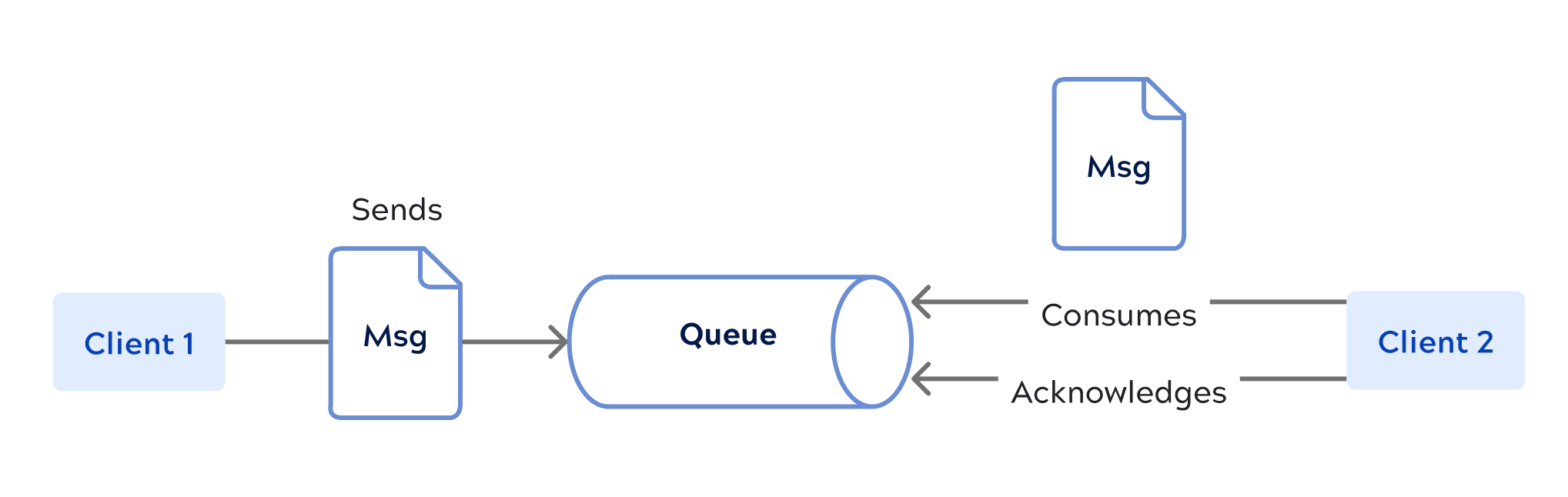
PTP messaging has the following characteristics:
-
Each message has only one consumer.
-
A sender and a receiver of a message have no timing dependencies. The receiver can fetch the message whether or not it was running when the client sent the message.
-
The receiver acknowledges the successful processing of a message.
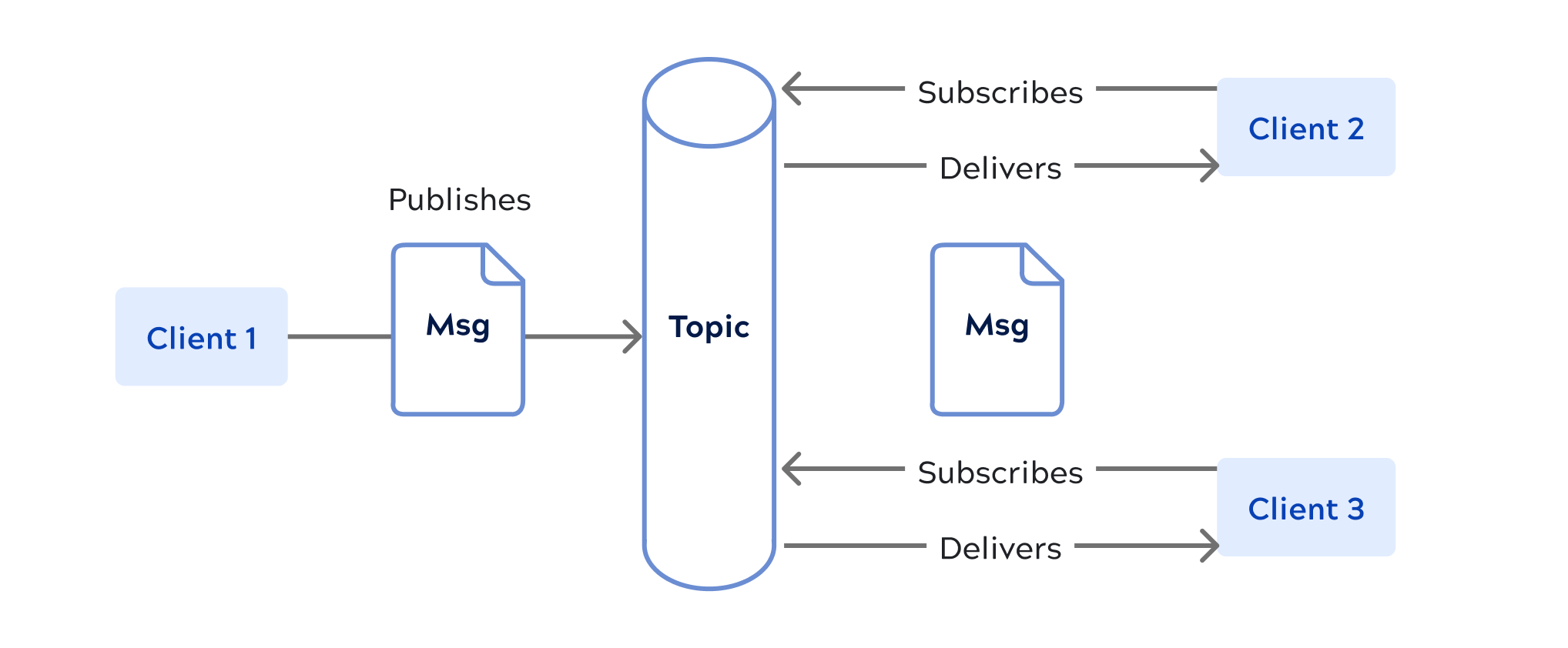
Pub/sub messaging has the following characteristics:
-
Each message can have multiple consumers.
-
Publishers and subscribers have a timing dependency. A client that subscribes to a topic can consume only messages published after the client has created a subscription, and the subscriber must continue to be active in order for it to consume messages.
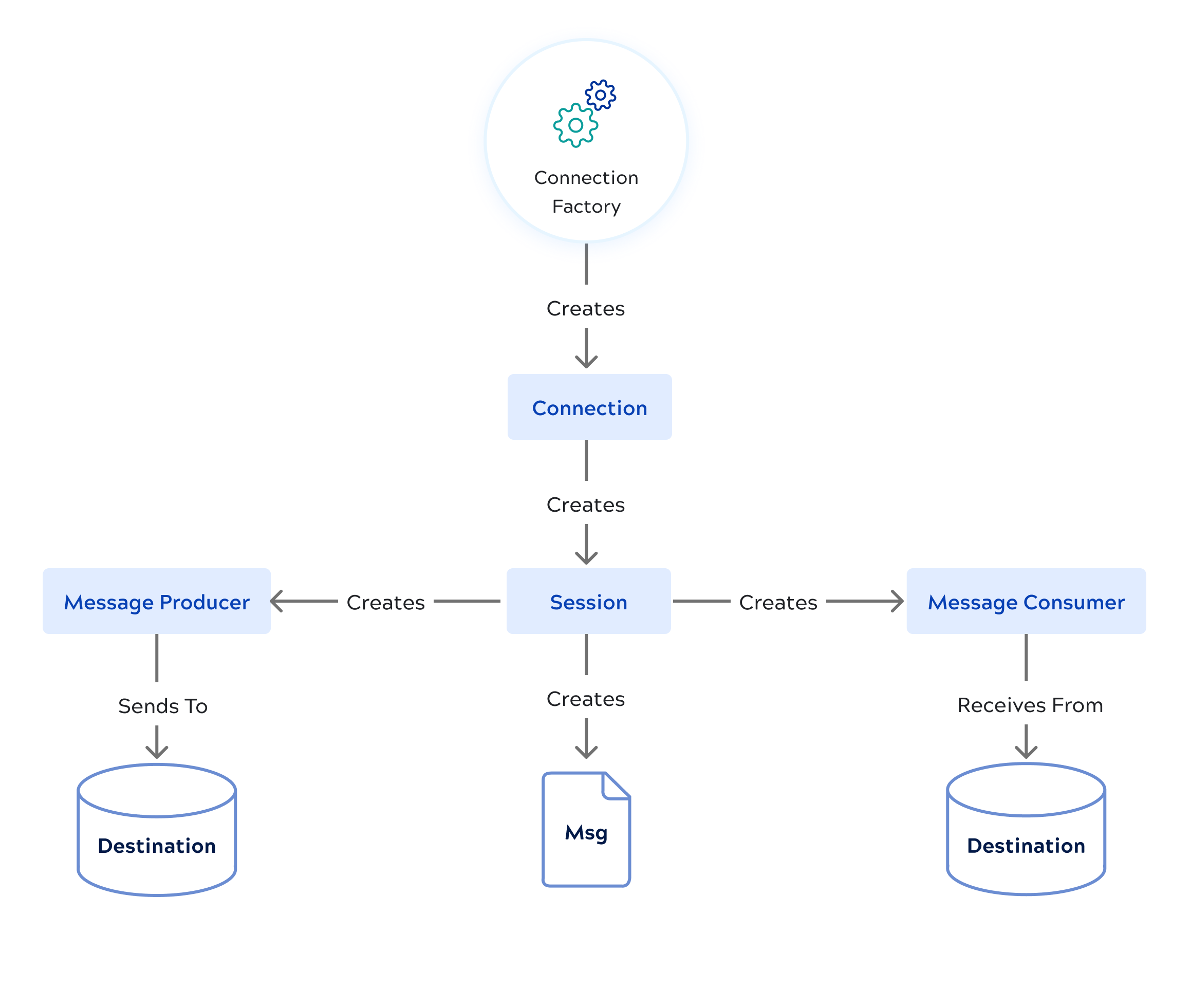
JMS building blocks contains:
-
Connection
-
Message producers
-
Message consumers