Analyze pipeline
Use SnapGPT to analyze pipelines, identify issues, and apply best-practice recommendations and environment standards to improve your pipelines.
SnapGPT can analyze pipelines, identify issues, and suggest best practices to improve your pipelines. If your environment has the standards configured, the analysis also checks the pipeline against those standards and lists the findings alongside SnapLogic's built-in rules.
Select optional standards before analyzing pipeline
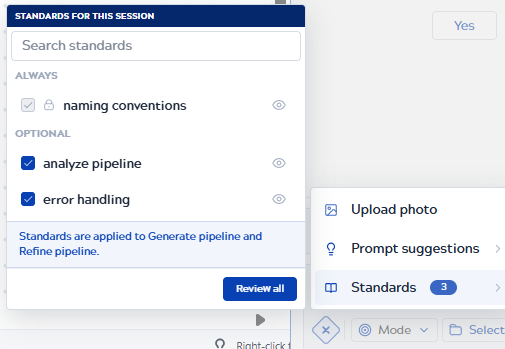
To include optional standards in the analysis, select them from the STANDARDS FOR THIS SESSION panel before running the analysis. In the SnapGPT panel, click + and then click Standards to open the panel and select the optional standards.
For more information, refer to SnapGPT pipeline standards.
View and apply fixes
Perform the following steps to view the mandatory and recommended fixes and apply them to the pipeline:
-
Press Return or click
 .
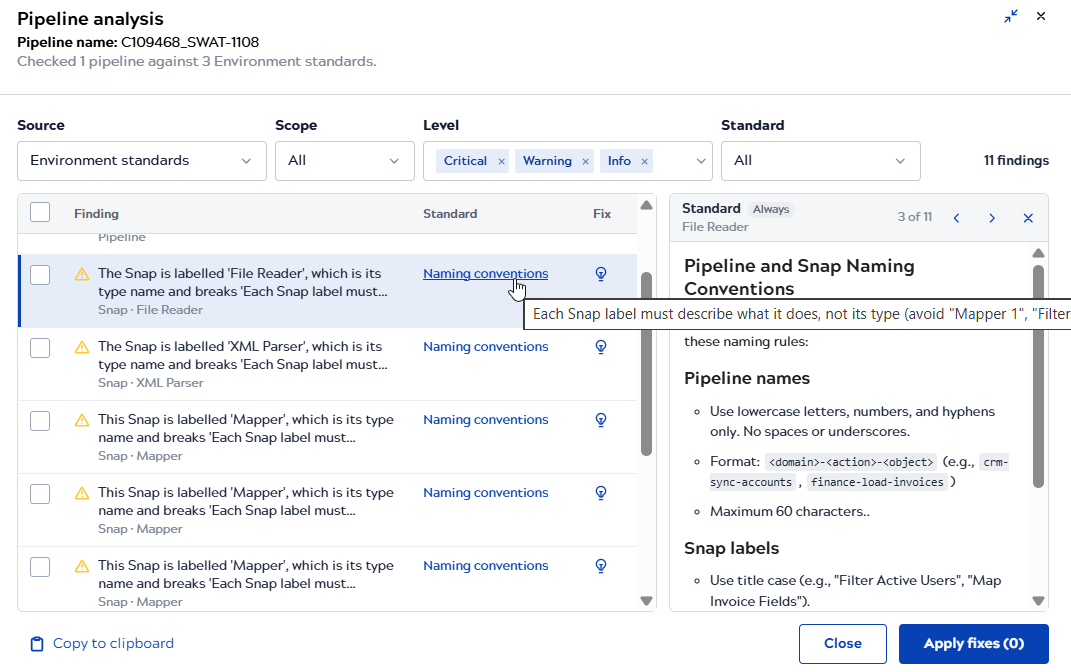
The Pipeline analysis dialog opens with a list of findings. If your environment has standards configured, the subtitle displays the number of standards that are checked against the pipeline. Each finding includes the standard it violates and a recommended fix.

-
Use the following filters to narrow the findings:
-
Source: Filter findings by their origin.
- Environment standards: Findings from the Always and Optional standards configured for your environment.
- SnapLogic rules: Predefined rules applied across all environments.
- All: Findings from both sources.
Note: When the environment has standards configured, the dialog opens with Source set to Environment standards by default. The findings related to SnapLogic rules are not displayed until you select SnapLogic rules or All from the dropdown.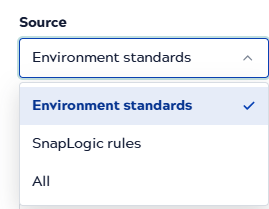
-
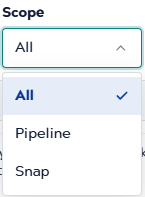
Scope: Filter findings by where they apply: Snaps, the Pipeline, or All.
-
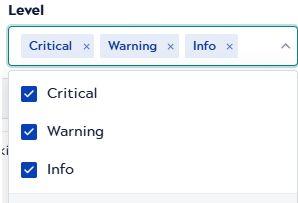
Level: Filter by severity. By default, Critical, Warning, and Info are selected.
-
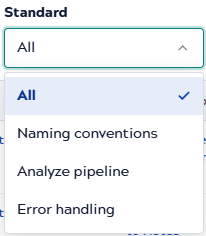
Standard: Filter by a specific standard name. The dropdown lists the Always and Optional standards applied in the current analysis. Learn more.
Note: If the environment has no standards configured, the Source and Standard dropdowns, the Standard, Recommended fix columns, and Apply fixes do not appear. -
-
View the details of a finding using the following options:
- Click the standard name under the Standard column to view its
instructions in the right pane. Click < or
> to move to the previous or next finding in the list.
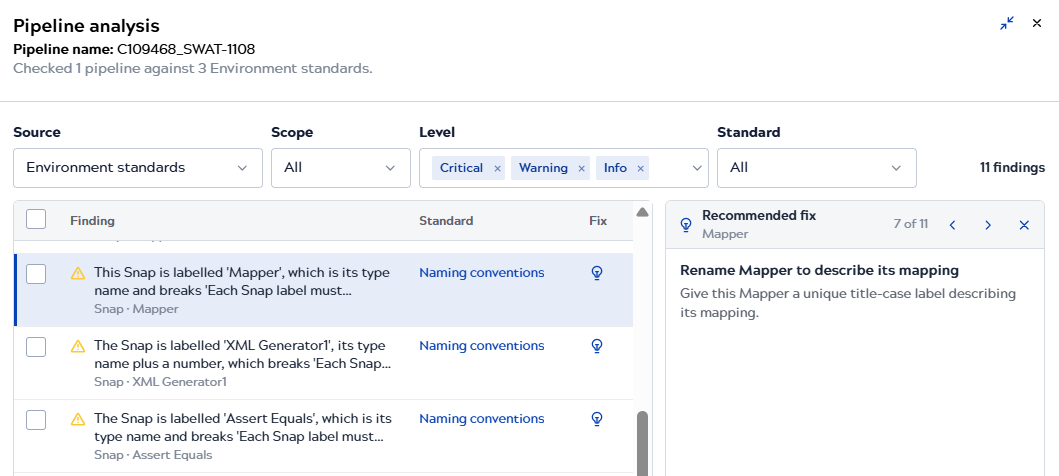
- Click a fix under the Recommended fix column to view its
details in the right pane. Click < or
> to move to the previous or next finding in the list.
- Click the standard name under the Standard column to view its
instructions in the right pane. Click < or
> to move to the previous or next finding in the list.
-
To apply fixes, select the checkboxes next to one or more findings, then click
Apply fixes.
- Only Environment standards findings that have a recommended fix can be selected. To apply all eligible fixes at once, select all before clicking.
- SnapLogic rules and informational findings cannot be selected: their checkboxes are grayed out and nothing from them is sent when you click Apply fixes.
- The Apply fixes button count reflects only the selected Environment standards fixes.
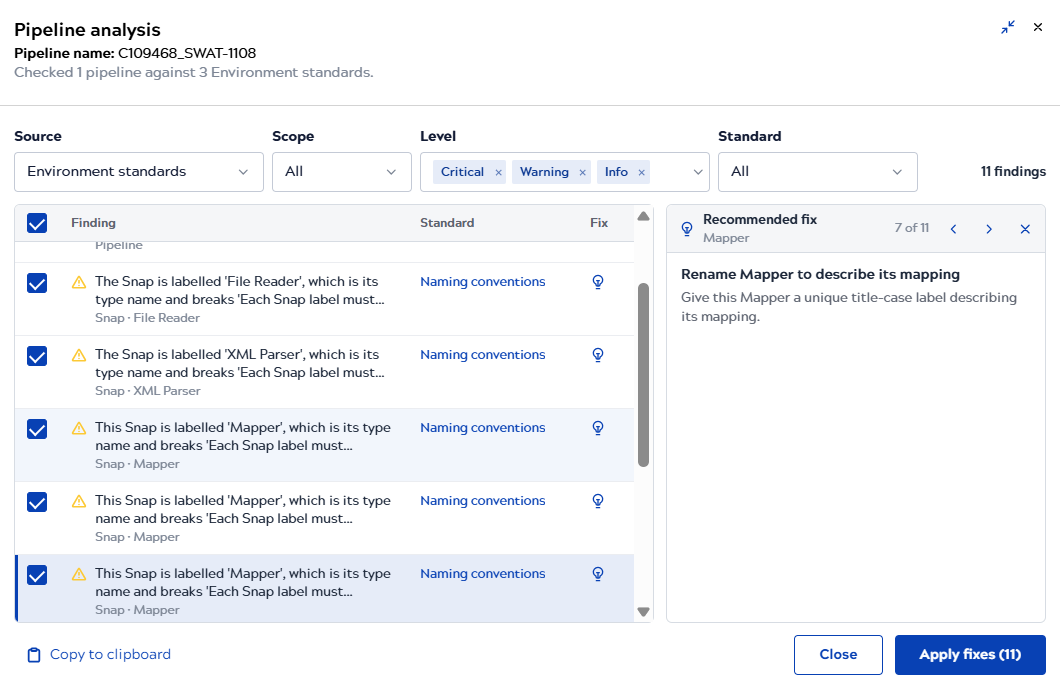
To copy the findings that match the current filters, click Copy to clipboard.
-
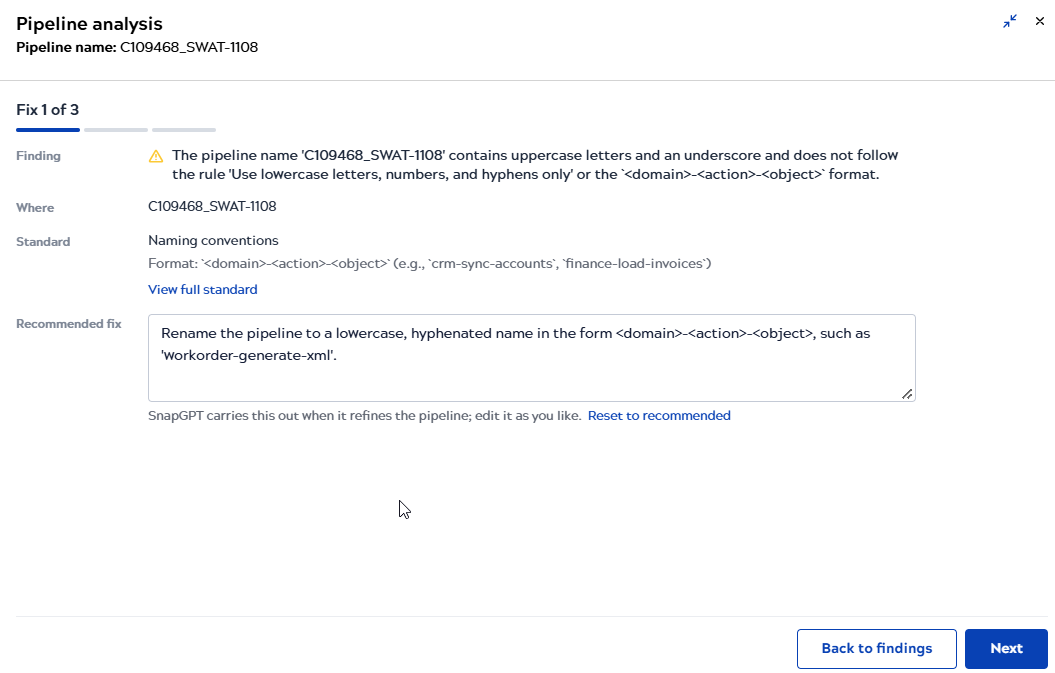
Browse through the details of each selected fix. For each fix, the details panel shows
the description of the finding, name of the pipeline where the finding is applied, the
standard considered, and the recommended fix. Edit the recommended fix text before sending
it. What you enter is what SnapGPT receives. Click Reset to
recommended to restore the original text.
Click Next to move to the next recommended fix.
-
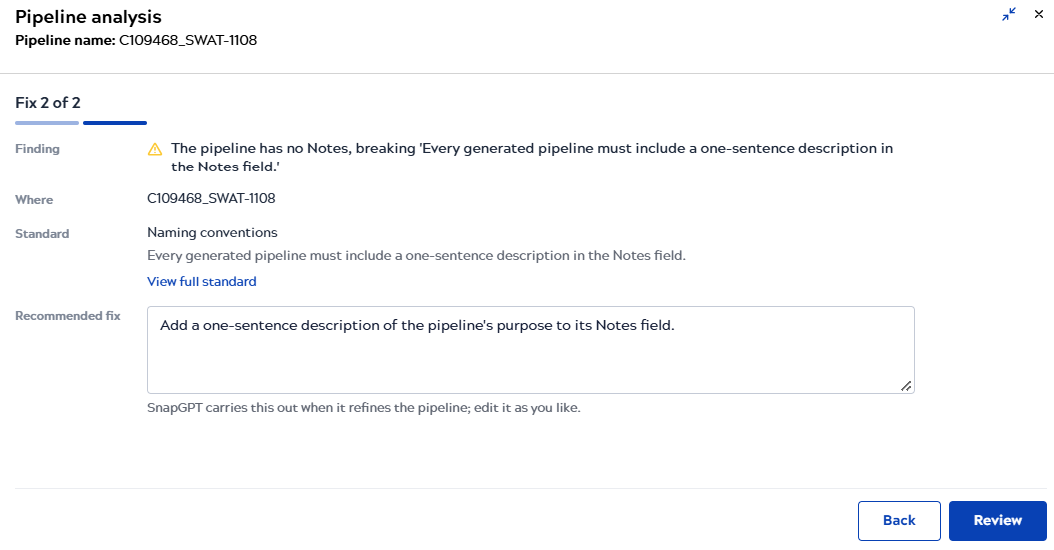
After you review all the selected fixes, click Review on the
last recommended fix.
-
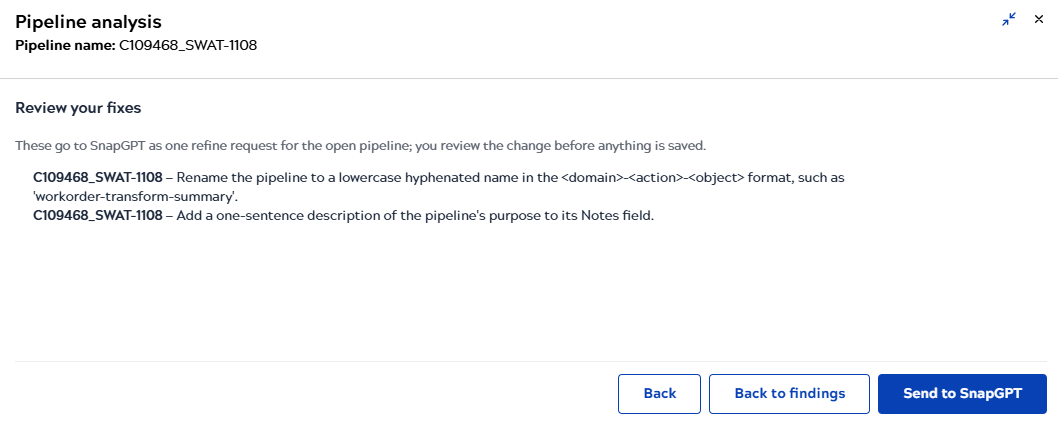
Review all the recommended fixes listed as a combined refine request for the open
pipeline, then click Send to SnapGPT, or go back to the individual
findings.
-
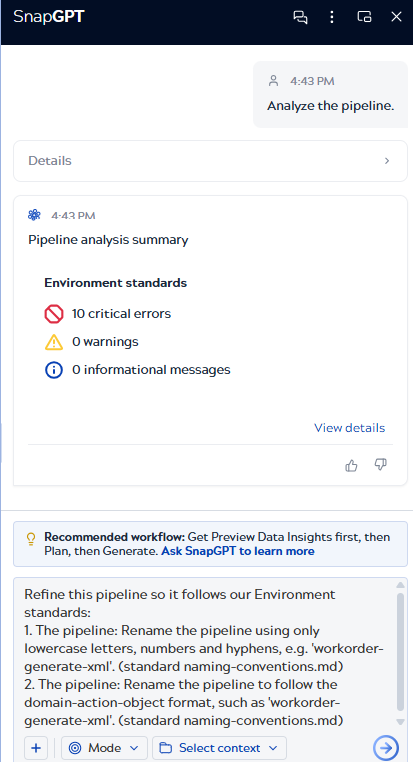
In the SnapGPT panel, all the recommended fixes are displayed as refine requests. Click
to submit.
-
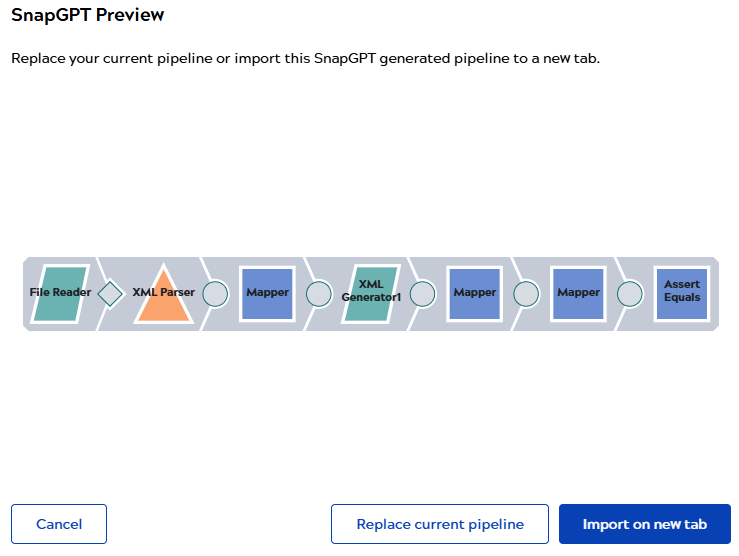
After SnapGPT applies all the refine requests, choose to replace the current pipeline
or import it in a new tab.